Inspection Roulette: Why Container Cleanliness Has Become the Customs Clearance Variable No US Importer Can Afford to Ignore
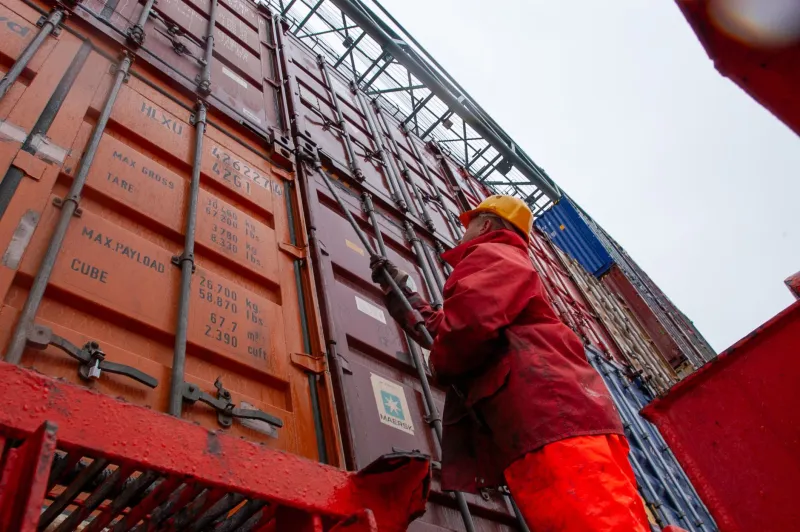
For decades, US importers measured customs risk through the familiar lenses of documentation accuracy, tariff classification, and country-of-origin compliance. Container hygiene, if considered at all, was an afterthought—a secondary concern delegated to freight forwarders or quietly absorbed into the cost of doing business. That calculus has changed.
Since 2021, both US Customs and Border Protection (CBP) and the Food and Drug Administration (FDA) have substantially intensified physical inspection protocols at major American ports, including Los Angeles, Long Beach, Houston, Savannah, and Newark. The result is a new and largely underreported trade friction: cleanliness-based cargo holds that are delaying shipments, triggering compliance reviews, and in the most serious cases, forcing outright rejections that cascade into supplier disputes, retailer penalties, and reputational damage.
The Inspection Landscape Has Fundamentally Shifted
Pre-pandemic, physical examinations accounted for a relatively modest percentage of incoming container traffic. The disruption years changed that. Supply chain irregularities, the proliferation of new shipping routes, and heightened biosecurity awareness following global health events prompted federal agencies to expand their inspection mandates. CBP's Cargo Enforcement division and FDA's Import Operations unit have both added inspection criteria that now explicitly include container interior conditions—residual organic matter, pest evidence, chemical contamination indicators, and surface microbial load.
According to industry tracking data compiled by the National Customs Brokers & Forwarders Association of America, the average hold time for a flagged container at a major US port currently sits between 11 and 19 business days, depending on the port and the nature of the violation. For food-grade, pharmaceutical, and agricultural import categories—sectors where FDA oversight is most rigorous—that window can extend considerably further if secondary laboratory testing is ordered.
For a mid-sized importer managing 40-foot containers carrying time-sensitive consumer goods, a 15-day hold does not simply mean delayed inventory. It means warehousing fees at port, premium freight costs to reroute or expedite alternative stock, retailer chargebacks for missed delivery windows, and the administrative burden of responding to federal notices—costs that routinely exceed $25,000 per incident when fully aggregated.
What Inspectors Are Actually Looking For
The inspection criteria that trigger cleanliness-based holds are more specific than most importers realize. CBP agriculture specialists are trained to identify soil transfer, plant material residue, and insect evidence that may indicate non-compliant phytosanitary conditions. FDA inspectors evaluating food and drug containers assess interior surfaces for biological contamination, previous cargo residue that may constitute adulteration risk, and evidence of moisture intrusion that could compromise product integrity.
Critically, these inspections are not limited to containers that have visibly failed. Random-selection protocols mean that even well-documented shipments from reputable suppliers are subject to physical examination. What differentiates a cleared container from a held one, in many cases, is simply the condition of the interior surfaces at the time of inspection.
Importers who have invested in pre-departure steam cleaning at the origin port—or who mandate certified container preparation as a supplier requirement—are presenting inspectors with a materially different picture. High-pressure industrial steam cleaning eliminates biological residue, neutralizes surface contaminants, and removes the physical evidence that triggers secondary examination flags.
The Pre-Clearance Advantage: Data From the Field
The performance differential between importers who apply systematic container sanitation and those who do not is becoming measurable. Logistics professionals operating in the agricultural commodity and processed food sectors report that containers accompanied by certified steam cleaning documentation—particularly those with third-party verification attached to the bill of lading—move through CBP physical examination queues significantly faster than industry averages.
One regional produce importer operating out of the Port of Miami implemented a mandatory pre-shipment steam cleaning protocol across its primary South American supplier network in early 2023. Within two shipping cycles, their average customs hold rate dropped by 62 percent compared to their prior 18-month baseline. Their average port dwell time for cleared shipments fell from 4.7 days to 2.1 days. The annualized cost savings from reduced demurrage, eliminated penalty fees, and recovered retailer relationships exceeded the cost of the sanitation program by a factor of more than four.
A second case, involving a household goods importer sourcing from Southeast Asia through the Port of Los Angeles, illustrates a different dimension of the advantage. After two consecutive CBP holds in a six-month period—both attributed to organic residue from prior agricultural cargo in shared containers—the company negotiated directly with its freight consolidator to require steam-cleaned containers as a contractual standard. Their subsequent 14-month period produced zero cleanliness-related holds.
The Documentation Layer That Changes Everything
Beyond the physical cleaning itself, the evidentiary value of proper documentation cannot be overstated. CBP and FDA inspectors operate within a risk-scoring framework that assigns clearance priority based on compliance history, supplier reputation, and supporting documentation quality. A container accompanied by a verifiable sanitation certificate—ideally one with photographic evidence, temperature logs from steam treatment, and a third-party inspector signature—enters the inspection queue with a materially lower risk profile.
This is not theoretical. Customs brokers advising high-volume importers increasingly recommend proactive sanitation documentation as a component of what the trade compliance community calls a Trusted Trader posture—the aggregate of behaviors and records that signal to federal agencies that a given importer is a low-risk actor worthy of expedited treatment.
Reclassifying Cleanliness as a Strategic Input
The importers absorbing the highest costs from customs delays are, almost uniformly, those who continue to treat container condition as someone else's problem. The practical reality of modern US port enforcement is that federal agencies do not assign blame by supply chain position. The importer of record bears the consequence of a hold regardless of whether the contamination originated with a foreign supplier, a consolidation hub, or a vessel operator.
This asymmetry of consequence demands a corresponding asymmetry of attention. Establishing supplier-side steam cleaning requirements, building sanitation verification into procurement contracts, and maintaining a documented compliance record at the container level are not premium-tier logistics behaviors. In the current enforcement environment, they are baseline risk management.
The port authority's mandate is biosecurity and regulatory compliance. The importer's mandate is profitability and continuity. Where those two mandates intersect—at the container door, under the inspector's flashlight—preparation is the only variable that remains within the importer's control.