Degrees of Exposure: How Steam Temperature Drift at Global Ports Is Building a Silent Compliance Time Bomb for US Exporters
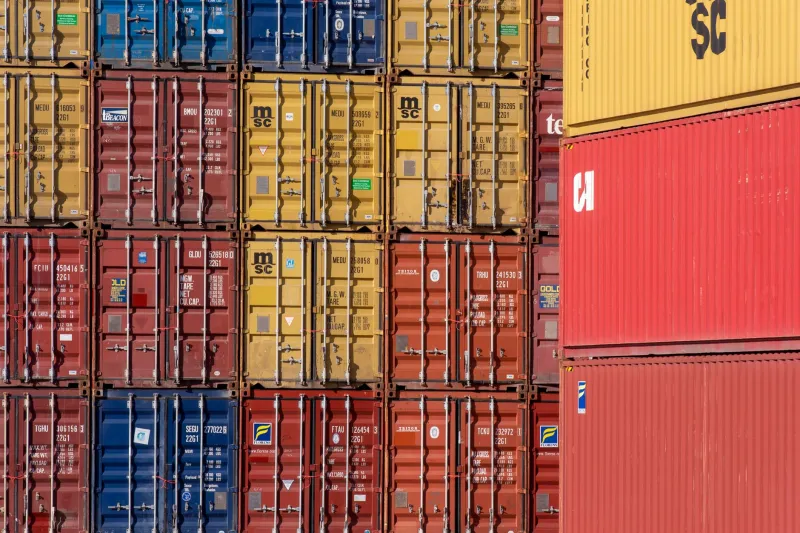
In the world of international logistics, the most dangerous problems are rarely the ones that trigger an immediate alarm. They are the ones that pass through every checkpoint undetected, accumulate quietly across shipments and months, and then surface at the worst possible moment—during a quality audit, a customs dispute, or a contractual review that puts an entire trade relationship at risk.
Steam temperature variance in cargo cleaning is exactly that kind of problem. And for US exporters operating across multiple international ports, it is one that the industry has been systematically underestimating.
The Measurement Gap Nobody Wants to Talk About
When a shipping container is steam cleaned at a port facility—whether in Rotterdam, Busan, Santos, or Los Angeles—a compliance certificate is typically generated confirming that the process was completed. What that certificate rarely specifies with any precision is the actual temperature sustained throughout the cleaning cycle, the duration of exposure at peak heat, or the variance recorded between the initial application and the final measurement.
This is not a minor administrative oversight. Effective steam cleaning for cargo compliance purposes—particularly when containers are being prepared for agricultural products, pharmaceuticals, or food-grade shipments—depends on maintaining specific temperature thresholds for defined periods. The difference between 212°F and 220°F may appear negligible on paper. In practice, that margin can determine whether certain microbial contaminants, pest residues, or organic material are fully neutralized or merely suppressed.
According to industry professionals who work across multiple port environments, the equipment calibration standards used by third-party cleaning contractors vary dramatically by region. In some high-volume Asian ports, aging steam units may drift by as much as 8 to 12 degrees Fahrenheit from their displayed readings. In South American facilities, inconsistent power supply infrastructure can cause temperature fluctuations mid-cycle that go entirely unlogged. Yet the compliance paperwork generated at the end of each process looks virtually identical regardless of what actually occurred inside that container.
When Five Degrees Becomes Five Figures
Consider what happened to a mid-sized US agricultural exporter shipping grain-adjacent products through a Southeast Asian transshipment hub in late 2022. The company had established a robust documentation process, collecting steam cleaning certificates at every leg of the journey and maintaining a compliance file that passed initial inspection at the destination port without issue.
Nearly seven months later, during a routine quality audit required by a European retail buyer, independent laboratory testing revealed residual contamination markers inconsistent with the cleaning protocols the documentation claimed had been applied. Tracing the issue backward through the supply chain took weeks. The eventual finding pointed to a single port facility where cleaning equipment had been operating at temperatures consistently 6 to 9 degrees below the contracted specification—not enough to trigger visible failure, but enough to leave a residual biological signature that compounded across subsequent storage and transit conditions.
The financial fallout included rejected inventory, audit remediation costs, a suspended buyer contract, and legal fees associated with the liability dispute between the exporter and the logistics provider. Total exposure exceeded $340,000. The root cause was a temperature discrepancy that no one on either side of the transaction had been measuring.
This scenario is not an outlier. Supply chain compliance consultants working with US-based importers and exporters report that temperature-related documentation gaps are among the most frequently identified issues in post-incident audits—precisely because they are invisible during routine operations.
The Patchwork of Standards Creating the Problem
Part of what makes this issue so difficult to address is the absence of a unified international framework governing steam cleaning temperature verification for cargo containers. The International Plant Protection Convention (IPPC) provides guidelines for certain phytosanitary treatments, and the USDA imposes specific requirements for agricultural imports entering the United States. However, the standards applied at individual port facilities around the world are largely determined by local regulatory bodies, private contractor agreements, and—in many cases—industry custom rather than enforceable mandate.
The result is a patchwork system in which a container cleaned in Hamburg may be held to materially different temperature verification standards than one cleaned in Colombo or Manzanillo. US exporters who assume that a compliance certificate from any accredited facility carries equivalent evidentiary weight are operating on a flawed premise—one that can remain undetected until a downstream audit or regulatory review forces a reckoning.
Furthermore, the instruments used to measure and record steam temperatures at port facilities are subject to inconsistent calibration schedules. Some contractors calibrate their equipment quarterly; others do so annually or only when a visible malfunction occurs. There is no international registry of calibration records for port-based steam cleaning equipment, and requesting such documentation from overseas contractors is, in practice, rarely done by US logistics teams managing high-volume shipment flows.
What Responsible Documentation Actually Requires
For US exporters who want to move beyond compliance theater and build documentation that will hold up under genuine scrutiny, the standard needs to be higher than what most port facilities currently provide by default.
Effective temperature verification should include time-stamped logs of temperature readings taken at multiple points during the cleaning cycle—not just at initiation and completion. It should document the specific equipment used, including the last recorded calibration date and any variance notes from the operator. And it should capture readings from multiple interior points within the container, since temperature distribution inside a sealed metal unit during steam application is rarely uniform.
Some logistics providers operating at the forefront of compliance management have begun requiring third-party verification of cleaning processes for high-value or high-sensitivity cargo—engaging independent inspectors to observe and log the process rather than relying solely on contractor-generated documentation. While this adds cost and logistical complexity, it creates a defensible record that carries substantially more weight in audit and liability contexts.
Digital monitoring tools, including IoT-enabled temperature sensors that can be placed inside containers during the cleaning process and transmit data to a cloud-based record, are also beginning to enter the market. Adoption remains limited, but for exporters operating in sectors where compliance failure carries significant financial or regulatory consequence, the investment calculus is becoming increasingly favorable.
The Strategic Imperative
The broader lesson here is one that US exporters across sectors—agriculture, pharmaceuticals, manufactured goods, food and beverage—need to internalize before a compliance gap becomes a compliance crisis. Steam cleaning documentation is not a formality. It is a legal and operational record that may be called upon to defend shipments, satisfy buyer requirements, or establish liability in a dispute. When that documentation is built on temperature data that was never accurately captured in the first place, the entire compliance architecture rests on an unstable foundation.
The pressure point nobody is measuring is also the one most likely to give way under stress. Addressing it requires logistics providers and exporters alike to demand more from the cleaning processes that underpin their compliance claims—not because regulators are currently requiring it, but because the cost of waiting until they do is already proving far higher than the cost of getting ahead of the problem.
For companies moving cargo across global supply chains, the margin between a valid compliance record and an invalidated one may be as narrow as five degrees. That is a margin worth measuring.