Contaminated Containers, Collapsing Compliance: The FDA Rejection Crisis Reshaping US Import Strategy
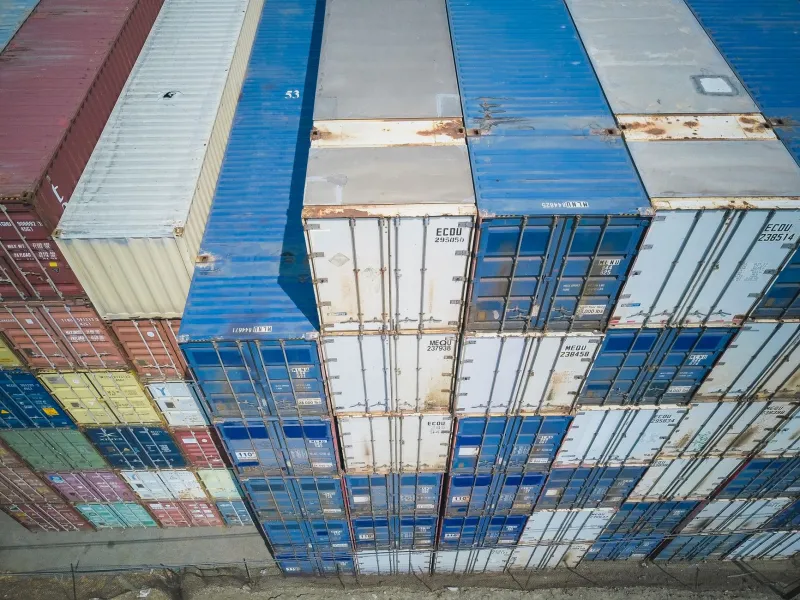
For decades, the shared shipping container was celebrated as one of global trade's most elegant efficiencies. A single steel box could carry consumer electronics across the Pacific one month and pharmaceutical raw materials the next. The economics were compelling. The consequences, it turns out, have been quietly accumulating—and US importers are now paying the price in regulatory penalties, destroyed inventory, and reputational damage that no balance sheet fully captures.
The FDA's refusal reports, publicly accessible through the agency's Import Refusal Report database, tell a story that is becoming increasingly difficult to ignore. Contamination-related rejections tied to shipping and storage conditions have climbed steadily over the past several years, with food and pharmaceutical product lines bearing a disproportionate share of the burden. Industry analysts tracking these figures describe the current environment as an inflection point—one where the operational decisions made inside logistics departments are now directly producing compliance failures at the border.
What Cross-Contamination Actually Looks Like in Practice
The term "cross-contamination" tends to conjure images of dramatic chemical spills or obvious spoilage. The reality inside a shared freight container is far more insidious. Residual pesticide traces from a previous agricultural shipment. Microscopic allergen particles—peanut proteins, gluten fragments—embedded in container walls and flooring. Hydrocarbon residues from industrial cargo that preceded a food-grade shipment by only days. These are not hypothetical scenarios. They are documented patterns appearing in FDA import alerts and recall notices with increasing frequency.
For pharmaceutical importers, the stakes are even more acute. Active pharmaceutical ingredients, excipients, and finished dosage forms are acutely sensitive to chemical cross-exposure. A container that previously carried solvents, lubricants, or even strongly scented consumer goods can deposit volatile organic compounds onto pharmaceutical packaging at concentrations well below what a visual inspection would detect—yet well above what regulatory testing thresholds permit.
The challenge is compounded by the realities of how modern container logistics actually operate. In a high-volume global supply chain, importers rarely have full visibility into a container's prior cargo history. Shipping lines rotate equipment continuously across dozens of trade lanes. A container arriving at the Port of Los Angeles or the Port of Savannah may have made three or four distinct cargo runs since its last cleaning—if it was cleaned at all in any meaningful sense.
The Regulatory Framework Is Tightening, Not Relaxing
Some importers have historically treated FDA border rejections as an occasional cost of doing business—an operational nuisance rather than a strategic threat. That calculus is changing rapidly. The Food Safety Modernization Act introduced preventive controls requirements that place explicit responsibility on importers to verify that their supply chains, including transportation and storage conditions, meet defined safety standards. The FDA's Foreign Supplier Verification Program extends that accountability further upstream, requiring importers to conduct hazard analyses that encompass the physical integrity of shipping vessels and containers.
Failure to satisfy these requirements does not merely produce a single rejected shipment. Repeat violations can trigger import alerts that effectively bar an importer's products from entry until a comprehensive corrective action plan is approved. For companies with thin margins and time-sensitive inventory cycles, an import alert is an existential event. Legal costs, destroyed goods, emergency sourcing from alternative suppliers, and the administrative burden of regulatory remediation can collectively run into the millions—before accounting for any downstream consumer harm that triggers civil liability.
Pharmaceutical importers operating under FDA's Current Good Manufacturing Practice regulations face an equally unforgiving framework. cGMP guidelines address transportation conditions as part of the broader quality system, and contamination traced to shipping infrastructure can constitute a manufacturing deviation that invalidates entire production batches.
Why Traditional Cleaning Protocols Are No Longer Sufficient
The standard response to container hygiene concerns has historically been a basic wash-out: a pressure rinse, perhaps a sweep, and a visual inspection before the next load. For cargo categories with limited contamination sensitivity, this approach may be adequate. For food and pharmaceutical supply chains operating under modern regulatory scrutiny, it is not.
Pressure washing with water removes bulk debris but leaves behind biofilms, chemical residues, and allergen particles that adhere to container surfaces at a molecular level. Many of the most problematic contaminants—pesticide residues, certain allergens, pharmaceutical actives—are not water-soluble under ambient conditions. They require either elevated temperature, chemical treatment, or both to achieve genuine decontamination.
Industrial steam cleaning addresses this gap in a way that conventional methods cannot. High-temperature steam penetrates surface irregularities in container flooring and wall panels, disrupting the adhesion mechanisms that allow contaminants to persist through a standard rinse cycle. Steam also delivers a thermal kill effect on microbial populations—mold spores, bacteria, and other biological agents—without introducing additional chemical residues that could themselves become a compliance concern.
From a regulatory documentation standpoint, industrial steam cleaning also offers something that a basic wash-out cannot: a verifiable, reproducible process with measurable parameters. Temperature logs, dwell times, and surface coverage records create an audit trail that supports an importer's preventive controls documentation and FSVP compliance records. In a regulatory environment where demonstrating due diligence is as important as achieving the underlying safety outcome, that documentation carries real value.
The Business Case Beyond Compliance
It would be a mistake to frame industrial container cleaning purely as a regulatory obligation. The financial logic stands independently of any compliance consideration. A single FDA-rejected shipment of high-value pharmaceutical product can destroy inventory worth hundreds of thousands of dollars. A voluntary recall triggered by allergen contamination that traces back to shipping conditions carries average costs that industry studies consistently place in the seven-figure range, even for relatively contained events.
Against those exposures, the cost of systematic, professional steam cleaning at key points in the container's journey—particularly before loading food or pharmaceutical cargo—is modest. More importantly, it is predictable. It converts a potentially catastrophic variable cost into a manageable fixed expense that can be planned, budgeted, and documented.
For supply chain leaders under pressure to demonstrate risk management rigor to insurers, board-level stakeholders, and trading partners, that predictability has strategic value beyond the immediate financial calculus. Companies that can demonstrate robust container hygiene protocols as part of their broader quality assurance infrastructure are increasingly differentiated in customer and partner selection processes—particularly as large retail and pharmaceutical buyers tighten their own supplier qualification requirements.
Rethinking Container Hygiene as a Strategic Imperative
The shared container will remain a cornerstone of global trade for the foreseeable future. The economic logic that made it indispensable has not changed. What has changed is the regulatory environment surrounding it, the complexity of the cargo types moving through it, and the scrutiny being applied to every link in the supply chain by both government agencies and private buyers.
US importers who treat container hygiene as an afterthought—something addressed reactively when a problem surfaces rather than proactively as a standard operating procedure—are accepting a level of regulatory and financial exposure that the current environment no longer justifies. The FDA's rejection data makes that case with considerable force.
The companies best positioned to navigate this landscape are those that have recognized industrial cleaning not as a maintenance function but as a risk management discipline—one that belongs in the same strategic conversation as supplier qualification, insurance coverage, and regulatory affairs. In that context, steam cleaning is not an optional service. It is an essential component of a supply chain designed to deliver consistently, compliantly, and without costly interruption.