Cleaner Lines, Stronger Chains: How Industrial Hygiene Is Reshaping American Manufacturing Competitiveness
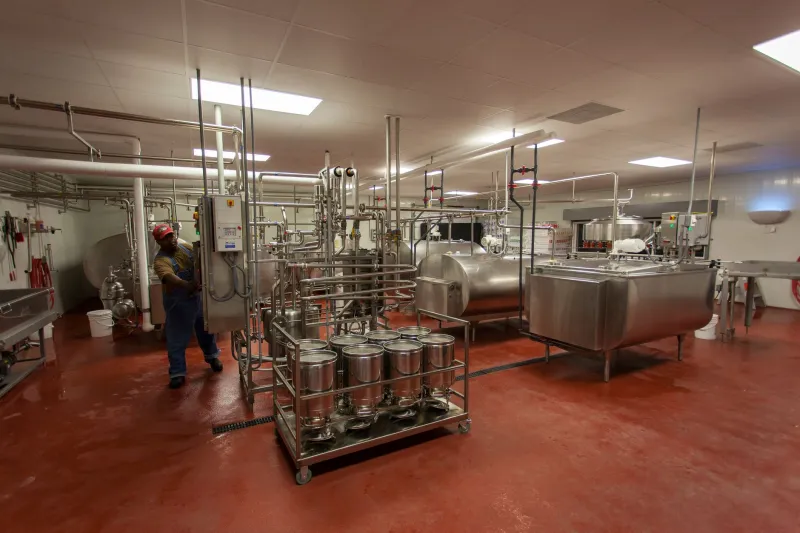
For decades, cleanliness in manufacturing was treated as a housekeeping matter — something addressed after production, not during it. That perspective is changing rapidly. Across the United States, manufacturers in sectors ranging from aerospace to food processing are recognizing that industrial hygiene is not merely a regulatory obligation but a measurable source of competitive advantage in global logistics.
At SteamIt Global, we work directly with facilities navigating the intersection of sanitation standards and international supply chain compliance. What we observe, consistently, is that companies investing in professional-grade steam cleaning protocols are outperforming their peers in certification rates, customs clearance speed, and overall operational reliability.
The Regulatory Landscape Is Raising the Bar
The United States maintains some of the world's most stringent industrial hygiene standards, administered through agencies including the FDA, USDA, and OSHA. However, when American manufacturers export goods or participate in international supply chains, they must also satisfy the sanitation requirements of destination markets — whether that means EU food safety directives, ISO cleanliness standards for automotive components, or biosecurity protocols governing agricultural equipment entering markets in Asia-Pacific.
Failure to meet these standards does not merely result in fines. It causes shipment holds, rejected containers, and in some cases, full product recalls that ripple back through the supply chain. The reputational damage from a single contamination incident can take years to repair.
Steam cleaning has emerged as one of the most effective technologies for addressing these multi-jurisdictional hygiene requirements. Operating at temperatures between 212°F and 356°F, industrial steam systems eliminate bacteria, mold, grease, and biological residue without the chemical runoff that complicates environmental compliance. This positions steam-cleaned facilities and equipment as inherently more audit-ready across a wider range of international standards.
Case Study: Food-Grade Equipment Manufacturer in the Midwest
A mid-sized food processing equipment manufacturer based in Illinois was experiencing recurring delays at European ports of entry. Inspectors were flagging trace residue on stainless steel components — residue that originated not from the product itself but from the manufacturing floor environment. The company's standard cleaning protocol relied on solvent-based agents applied manually, a method that left microscopic film deposits detectable under EU inspection protocols.
After partnering with a professional industrial steam cleaning provider and restructuring their post-production sanitation workflow, the company reduced port-related holds by 74 percent over an 18-month period. More significantly, they achieved CE marking recertification on four product lines that had previously been under review, opening access to markets in Germany, the Netherlands, and Scandinavia.
The key was not simply adopting steam technology — it was integrating cleaning into the production schedule as a documented, auditable step rather than an ad hoc procedure performed at the end of a shift.
What International Buyers Are Actually Looking For
Global procurement teams increasingly evaluate US suppliers not just on price and delivery timelines but on facility hygiene documentation. ISO 14644 cleanroom standards, HACCP compliance records, and third-party sanitation audits are becoming standard components of vendor qualification packages in industries including pharmaceuticals, electronics, and specialty food manufacturing.
Steam cleaning supports this documentation culture in a concrete way. Modern industrial steam systems generate temperature logs, pressure records, and dwell-time data that can be compiled into compliance reports. This traceability is precisely what international buyers need to satisfy their own regulatory obligations downstream.
American manufacturers who can present organized, timestamped hygiene records alongside their product specifications are consistently advancing further in international bid processes. Those who cannot are often eliminated before price negotiations begin.
The Contamination Delay Problem
Contamination-related logistics delays are more common than the industry typically acknowledges. According to supply chain risk assessments conducted across multiple sectors, biological or chemical contamination is among the top five causes of freight holds at major US export hubs including the Port of Los Angeles, the Port of Savannah, and Chicago's intermodal terminals.
These delays carry compounding costs. Beyond the direct expense of storage and re-inspection, manufacturers face expedited shipping fees to meet delivery commitments, penalties under supply agreements with international buyers, and the administrative burden of filing amended customs documentation. In industries with perishable goods or time-sensitive components, the financial exposure from a single contamination hold can reach six figures.
Facilities that implement steam cleaning checkpoints — particularly for equipment, packaging machinery, and transport containers — are measurably reducing their exposure to these events. The cleaning step functions as a form of supply chain insurance, one that pays dividends not only in avoided costs but in the trust that consistent, clean deliveries build with international partners.
Building a Culture of Hygiene Compliance
Perhaps the most important shift occurring in forward-thinking American manufacturing facilities is cultural. Hygiene compliance is being elevated from a quality control function to a supply chain strategy. Plant managers are collaborating with logistics coordinators to identify cleaning touchpoints that align with shipment preparation timelines. Procurement teams are specifying sanitation requirements in contracts with subcontractors and component suppliers.
This integrated approach reflects a broader truth that SteamIt Global has observed across our global client base: the supply chains that perform most reliably are those in which cleanliness is treated as a continuous process, not an intermittent event.
For US manufacturers competing in international markets, the message from buyers, regulators, and logistics partners is increasingly aligned. Hygiene is not overhead — it is infrastructure. And steam cleaning, applied systematically and documented rigorously, is one of the most efficient ways to build that infrastructure into daily operations.
The companies that understand this earliest will continue to move goods across borders with less friction, fewer delays, and stronger relationships with the global partners who keep their supply chains moving.