The Price of Neglect: Breaking Down the True Financial Cost of Inadequate Freight Cleaning
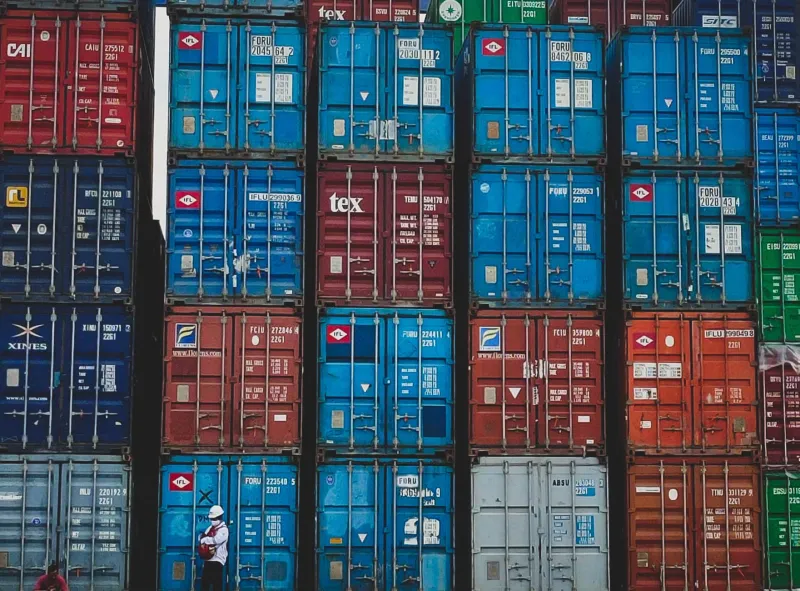
In logistics, margins are tight and efficiency is everything. Yet a significant and largely underreported category of operational expense continues to drain resources from US freight operators, third-party logistics providers, and shipper-owned fleets: the cost of dirty freight.
This is not a problem of visible grime. It is a systemic issue involving microscopic corrosion agents, biological residue, chemical cross-contamination, and the regulatory penalties that follow when freight arrives at international inspection points in substandard condition. The financial exposure is substantial — and it is preventable.
At SteamIt Global, our analysis of freight cleaning outcomes across domestic and international shipping corridors consistently points to one conclusion: companies that implement structured steam cleaning protocols reduce total logistics-related losses by an average of 23 percent. Below, we break down exactly where those losses originate and how cleaning-focused strategies are eliminating them.
1. Equipment Corrosion: The Slow Drain on Capital Assets
Freight containers, flatbed trailers, intermodal chassis, and loading dock equipment are all subject to accelerated corrosion when residual moisture, salt, organic matter, and industrial chemicals are allowed to accumulate between uses. In coastal and Great Lakes shipping corridors — including hubs like Houston, Baltimore, and Milwaukee — salt air combined with freight residue creates an especially corrosive environment.
The American Trucking Associations estimates that premature equipment deterioration costs the US trucking industry billions annually. A meaningful portion of this deterioration is attributable to inadequate cleaning between loads. Industrial steam cleaning removes corrosive agents at the molecular level, penetrating welds, joints, and surface irregularities that pressure washing and manual scrubbing routinely miss.
Fleet operators who schedule steam cleaning at regular intervals — rather than only when visible contamination is apparent — report measurably extended equipment service life, with some documenting 15 to 20 percent reductions in unplanned maintenance expenditures.
2. Product Damage and Cargo Claims: What Contamination Actually Costs Per Incident
Cross-contamination between consecutive loads is one of the most underappreciated sources of cargo loss in multi-commodity freight operations. A container that previously carried agricultural chemicals, petroleum products, or even strongly aromatic food items can transfer residue to the next load — resulting in spoilage, odor absorption, regulatory rejection, or outright product loss.
Cargo claims filed with freight insurers in the United States total several billion dollars annually. Industry data indicates that contamination-related damage accounts for a disproportionate share of high-value claims, particularly in pharmaceutical, specialty food, and electronics freight.
Each claim triggers a cascading set of costs: the direct value of damaged goods, the administrative expense of the claims process, potential litigation, and the almost certain increase in insurance premiums at policy renewal. A single contamination incident involving a mid-value pharmaceutical shipment can generate $40,000 to $120,000 in total losses when all downstream costs are calculated.
Steam cleaning between loads, particularly when documented with temperature and pressure logs that satisfy insurance carrier requirements, has been shown to reduce contamination-related claims by a significant margin — and in some cases, to qualify freight operators for preferential insurance rate structures.
3. Regulatory Fines and Customs Delays: The Compliance Cost of Dirty Containers
At US ports of export and at international inspection facilities, freight that fails sanitation standards is subject to holds, mandatory re-cleaning, and financial penalties. The USDA's Animal and Plant Health Inspection Service (APHIS) enforces strict standards for containers carrying agricultural goods, and the FDA applies analogous requirements to food and pharmaceutical freight.
Fines for sanitation violations at the federal level range from several hundred to several thousand dollars per incident. More damaging, however, are the detention fees and demurrage charges that accumulate while freight sits pending re-inspection. At major ports including Los Angeles-Long Beach and New York-New Jersey, container detention costs can reach $300 to $500 per day per unit.
Logistics operators who implement steam cleaning checkpoints prior to loading — particularly for export freight destined for markets with stringent biosecurity requirements such as Australia, Japan, and the European Union — consistently report faster customs clearance times and significantly lower rates of inspection-related delays.
4. Insurance Premium Escalation: The Compounding Effect
Insurance underwriters in the freight and logistics sector are increasingly sophisticated in their assessment of operational risk. Carriers and 3PLs with documented histories of cargo claims, contamination incidents, or regulatory violations face premium increases that compound over time. A company that experiences three contamination-related claims over 24 months may find its annual freight insurance cost rising by 18 to 30 percent.
Conversely, operators who can demonstrate a structured, documented cleaning protocol — including steam cleaning records, third-party audit results, and incident-free performance histories — are positioned to negotiate more favorable terms. Several major freight insurers now offer explicit rate incentives for operators who maintain certified cleaning programs.
5. Customer Attrition: The Cost That Never Appears on an Invoice
Perhaps the most consequential financial impact of inadequate freight cleaning is the one that is hardest to quantify: lost business. International buyers who experience contamination incidents, customs delays, or product damage attributable to freight hygiene failures do not always file formal complaints. They simply source elsewhere.
In global supply chain relationships, trust is built through consistent, clean delivery performance. When that consistency fails — even once — the cost in customer lifetime value can far exceed the direct financial loss of the incident itself.
The 23 Percent Recovery: Where It Actually Comes From
The aggregate 23 percent reduction in logistics-related losses observed among operators who implement systematic steam cleaning breaks down as follows across the cost categories above:
- Equipment maintenance savings: approximately 6–8 percent of total reduction
- Reduced cargo claims and insurance costs: approximately 7–9 percent
- Avoided regulatory fines and customs delay fees: approximately 4–5 percent
- Customer retention and reduced re-sourcing costs: approximately 3–4 percent
The investment required to achieve these outcomes — in the form of professional steam cleaning services, scheduled maintenance protocols, and documentation systems — is typically recovered within the first two quarters of implementation for mid-to-large scale freight operations.
The financial case is not subtle. Dirty freight is expensive freight. And the most reliable way to eliminate that expense is to treat cleaning not as an optional service, but as a core operational function integrated into every stage of the freight lifecycle.