The Verification Advantage: How Blockchain-Backed Sanitation Records Are Rewriting the Rules for US Exporters
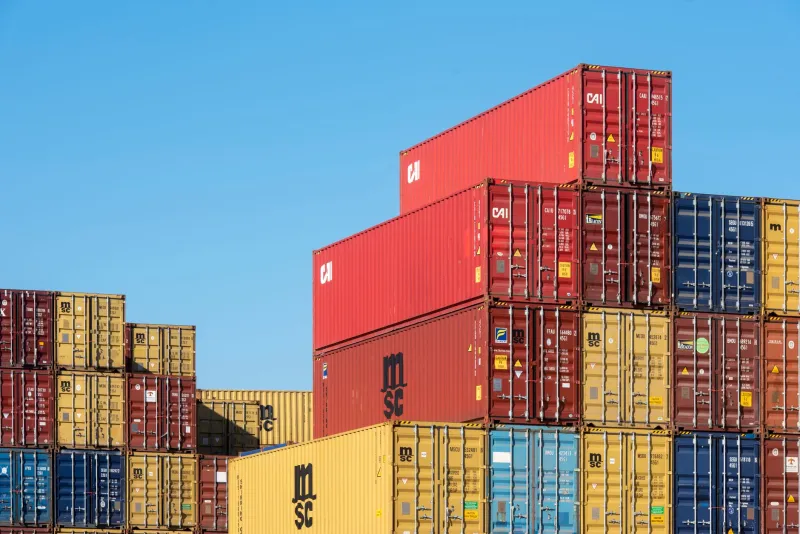
For decades, container cleanliness has occupied an awkward position in the international shipping conversation — universally acknowledged as important, yet rarely treated with the rigor its consequences demand. Importers in Europe, Southeast Asia, and the Gulf states have long complained about receiving shipments tainted by residual chemicals, biological matter, or cross-contamination from prior cargo loads. US exporters, meanwhile, have often struggled to prove the contrary. A handwritten inspection certificate or a stamped form from a third-party cleaning vendor offers limited assurance in an era when buyers are increasingly demanding verifiable, tamper-proof documentation.
That gap between expectation and evidence is now closing — and blockchain technology is the mechanism driving the change.
From Paper Trails to Permanent Records
Traditional container cleaning documentation has always been vulnerable to the same weaknesses that plague paper-based systems in any industry: records can be lost, altered, or simply fabricated. For a pharmaceutical buyer in Germany or a food-grade importer in Japan, a cleaning certificate that cannot be independently verified carries limited commercial weight. The burden of proof, historically, has fallen on the buyer's own inspection team at the destination port — an expensive, time-consuming arrangement that introduces friction and cost at precisely the wrong moment in the transaction.
Blockchain changes this dynamic fundamentally. By recording sanitation events on a distributed ledger — one that is immutable, timestamped, and accessible to authorized parties across the supply chain — US exporters can now provide international buyers with a complete, verifiable history of every cleaning and inspection event a container has undergone. Each entry in the chain corresponds to a specific action: steam cleaning at a port facility, residue testing, microbial swab results, inspector credentials, and GPS-tagged timestamps that confirm where and when each procedure occurred.
The result is not merely a cleaner container. It is a credentialed container — one whose hygiene history can be interrogated in real time by a buyer sitting in Osaka, Rotterdam, or Dubai before a single unit of cargo crosses their receiving dock.
Why Regulated Industries Are Leading the Adoption Curve
The pressure to adopt blockchain-backed sanitation verification has been most acute in sectors where contamination carries regulatory and legal consequences that extend well beyond a rejected shipment. The US pharmaceutical export market, valued at over $100 billion annually, operates under stringent FDA guidelines domestically — but American exporters must also satisfy the requirements of the European Medicines Agency, Japan's PMDA, and a constellation of other regulatory bodies whose standards for container integrity are exacting.
Food exporters face analogous pressures. The USDA's Agricultural Marketing Service and the FDA's Food Safety Modernization Act have raised domestic standards considerably, but international buyers often impose requirements that go further still. A single contamination event — whether microbial or chemical — can trigger not only the rejection of a specific shipment but a suspension of purchasing relationships that takes months or years to repair.
In both industries, blockchain verification addresses a core commercial anxiety: the inability to distinguish, at a distance, between an exporter who genuinely maintains rigorous sanitation standards and one who merely claims to. Digital verification eliminates that ambiguity. It converts a qualitative assurance into a quantitative, auditable record — and in competitive global markets, that distinction is increasingly decisive.
The Competitive Calculus for American Exporters
The strategic implications of this shift extend beyond compliance. US exporters competing against suppliers from lower-cost manufacturing regions have long sought ways to justify premium pricing and preferred-vendor status with international buyers. Quality assurance has traditionally served that function, but quality claims are only as credible as the systems used to substantiate them.
Blockchain-verified container sanitation offers a concrete, technology-enabled proof point that competitors in many emerging markets are not yet positioned to match. When a buyer in the Middle East or South Korea is choosing between a US supplier and a lower-cost alternative from another region, the ability to access a real-time, tamper-proof sanitation record for every container in a shipment represents a meaningful differentiator — particularly in categories where contamination risk carries significant downstream liability.
Several large US agricultural cooperatives and pharmaceutical distributors have already begun incorporating blockchain sanitation documentation into their standard export packages, treating it not as an ancillary service but as a core component of their value proposition. Early adopters report measurable reductions in destination-port inspection delays, fewer contested rejections, and stronger negotiating positions when renewing international supply agreements.
Infrastructure Requirements and the Role of Service Providers
Implementing blockchain-verified sanitation documentation is not a unilateral exercise. It requires coordination between the exporter, the container cleaning service provider, independent inspection bodies, and the blockchain platform itself. The cleaning provider must be equipped to log sanitation events directly into the digital ledger — a capability that demands both technological infrastructure and trained personnel.
This is where the quality of the service provider relationship becomes strategically significant. An exporter whose cleaning vendor lacks the systems to generate blockchain-compatible records cannot participate in this verification ecosystem, regardless of how rigorous their own internal standards may be. Choosing a logistics and industrial services partner with the capability to generate, transmit, and authenticate sanitation data is therefore not merely an operational decision — it is a commercial one.
For US exporters evaluating their supply chain partners, the relevant questions are shifting. It is no longer sufficient to ask whether a vendor cleans containers to an acceptable standard. The more consequential question is whether they can prove it — in a format that holds up to international scrutiny, satisfies regulatory auditors, and provides buyers with the confidence they need to maintain and expand purchasing commitments.
A New Standard Is Taking Shape
The adoption of blockchain-based container sanitation verification is still in its early stages, but the trajectory is clear. International buyers in regulated industries are beginning to treat digital hygiene documentation as a baseline expectation rather than a premium offering. Industry bodies in the European Union and Asia-Pacific have initiated discussions around standardized blockchain protocols for cargo hygiene records — a development that, if formalized, will create significant advantages for exporters who have already built the necessary infrastructure.
For US exporters, the window to establish a leadership position in this space remains open — but it will not remain open indefinitely. The exporters who move now to integrate blockchain-verified sanitation into their operational model will enter that standardized environment with established systems, trained partners, and a documented track record. Those who wait will find themselves retrofitting compliance into a framework that others helped design.
In global trade, the ability to prove what you claim is often worth more than the claim itself. Container cleanliness has always mattered. Now, for the first time, it can be demonstrated with the kind of precision that international markets increasingly demand.