Ocean Air, Invisible Damage: The Saltwater Corrosion Threat Quietly Compromising US Pharmaceutical Imports
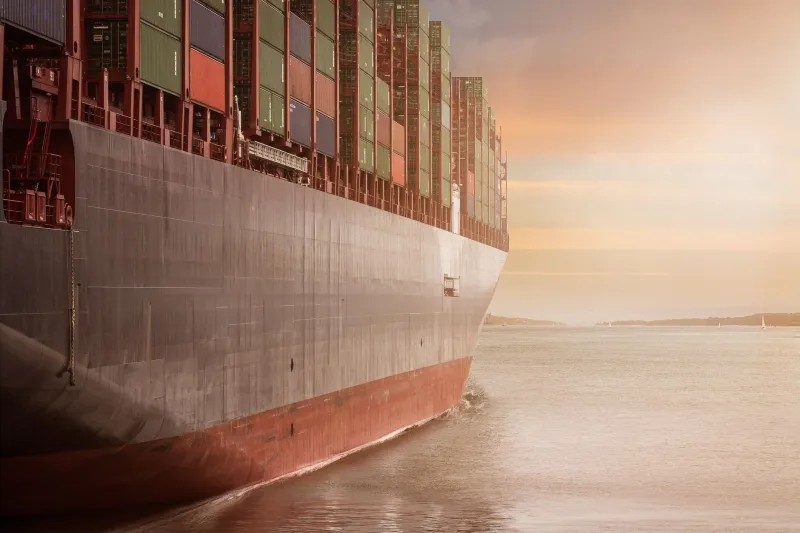
For US pharmaceutical importers, the ocean is not simply a passage between manufacturing origins and distribution endpoints. It is an active chemical environment — one that works continuously against the integrity of cargo held inside steel containers for weeks at a time. Salt-laden marine air, fluctuating humidity levels, and the condensation cycles inherent to long-haul ocean transit combine to create conditions that attack pharmaceutical packaging at the molecular level. The damage accumulates quietly, invisibly, and at a scale that the industry has been slow to quantify.
When contaminated or degraded shipments are ultimately flagged — whether at US Customs, during FDA inspection, or upon arrival at a distribution facility — the financial consequences are rarely limited to a single rejected pallet. They ripple outward into recall costs, regulatory scrutiny, reputational exposure, and the complex logistics of emergency resupply. For a sector where product integrity is not a preference but a legal and ethical obligation, the stakes are unusually high.
What Happens Inside a Container at Sea
The interior of a standard shipping container is far from a sealed, controlled environment. Steel walls expand and contract with temperature shifts — a phenomenon logistics professionals refer to as "container breathing." Each thermal cycle draws ambient air inward through microscopic gaps in door seals, panel joints, and flooring seams. In deep-sea transit across the Pacific or Atlantic, that ambient air carries a significant concentration of sodium chloride and other marine aerosols.
Once inside, moisture interacts with the metal surfaces of the container itself, with any exposed metal components in the cargo, and critically, with pharmaceutical packaging materials that were never designed to withstand sustained saline humidity. Blister packs, foil laminates, and cardboard secondary packaging all exhibit measurable degradation when exposed to elevated chloride concentrations over multi-week periods. Barrier properties diminish. Seal integrity weakens. In some cases, the packaging fails entirely — allowing moisture to reach the medication inside.
What makes this threat particularly insidious is that the damage is not always visible to the naked eye at the point of arrival. A pallet of blister-packed tablets may appear pristine on the surface while harboring compromised foil seals that will accelerate active ingredient degradation over the product's intended shelf life. By the time that degradation becomes detectable, the product may already be distributed.
The Pharmaceutical Vulnerability Profile
Not all pharmaceutical cargo faces equal exposure risk, but the categories most vulnerable to saltwater corrosion effects are precisely those with the highest value and the most complex regulatory requirements.
Moisture-sensitive APIs — active pharmaceutical ingredients — represent the most acute risk category. Many compounds used in cardiovascular, oncological, and neurological medications are hygroscopic by nature, meaning they actively absorb ambient moisture. When packaging barrier integrity is compromised during transit, these compounds can undergo hydrolysis, oxidation, or physical transformation that renders them clinically ineffective or, in worst-case scenarios, potentially harmful.
Medical devices and combination products shipped alongside pharmaceutical cargo face a parallel threat. Metal components — connectors, delivery mechanisms, calibration instruments — are susceptible to pitting corrosion from chloride exposure that may not be detectable without laboratory analysis. A device that passes visual inspection at the port may carry corrosion damage that will cause functional failure in a clinical setting.
Biologics, including monoclonal antibodies and protein-based therapies, represent a third high-risk category. These products are typically transported under temperature-controlled conditions, but cold chain management alone does not address the corrosive marine environment that surrounds the refrigerated unit during transit.
The Economic Calculus of Compromised Batches
The direct cost of a rejected pharmaceutical shipment is significant but calculable. A single contaminated batch of a specialty medication can represent hundreds of thousands of dollars in product value, with total loss-of-cargo figures for high-value biologics reaching into the millions. But the indirect costs — those that accumulate in the weeks and months following a rejection event — frequently dwarf the initial product loss.
FDA rejection triggers mandatory documentation, often including a Form 483 observation or import alert, which initiates a compliance review process that consumes legal, regulatory, and operational resources across the importing organization. If the affected product was already partially distributed before the compromise was detected, a voluntary recall becomes necessary — an event that carries average costs estimated by industry analysts at several million dollars when factoring in notification, retrieval, destruction, and regulatory reporting obligations.
Supply continuity disruption compounds the financial picture further. Pharmaceutical supply chains are not elastic systems. When a shipment is rejected or quarantined, replacement product must be sourced, re-manufactured, or redirected from alternative distribution channels — each option carrying its own cost premium and timeline uncertainty. For specialty medications with limited manufacturing capacity, the downstream effects on patient access can become a public relations and regulatory liability that extends well beyond the original logistics failure.
Vapor-Phase Corrosion Inhibitors: A Maturing Protective Technology
The logistics industry's response to marine corrosion risk has evolved considerably over the past decade, and US pharmaceutical importers are increasingly incorporating vapor-phase corrosion inhibitor technology — commonly referred to as VpCI — into their container loading and preparation protocols.
VpCI products work by releasing molecules that form a monomolecular protective layer on metal surfaces and interact with ambient moisture to interrupt the electrochemical processes that drive corrosion. Unlike traditional desiccants, which address moisture accumulation passively, VpCI formulations actively neutralize the corrosive potential of the marine atmosphere within a sealed container environment. They are available in several application formats, including emitter devices, impregnated packaging materials, and foam inserts that can be integrated directly into secondary packaging configurations.
For pharmaceutical cargo specifically, the adoption of VpCI solutions requires careful validation against existing regulatory requirements. Packaging materials that contact or are proximate to pharmaceutical products must comply with FDA guidance on indirect and direct contact materials, and VpCI formulations must be selected and documented with this compliance framework in mind. Logistics providers working in the pharmaceutical sector are increasingly developing validated container preparation protocols that incorporate VpCI technology alongside traditional desiccant systems, creating a layered approach to moisture and corrosion management.
Container pre-treatment — including thorough cleaning and inspection prior to pharmaceutical loading — is an equally critical component of a comprehensive protection strategy. Residual contaminants from prior cargo, including chloride deposits left by previous marine transit cycles, can accelerate corrosion processes even when VpCI systems are in place. Industrial-grade steam cleaning of container interiors prior to pharmaceutical loading has emerged as a best practice among logistics providers serving this sector, offering both decontamination and a reduction in baseline chloride load within the container environment.
Rethinking Risk at the Point of Origin
The pharmaceutical industry's relationship with ocean freight is not going to change. Manufacturing remains heavily concentrated in Asia and Europe, and US demand for imported medications and medical devices continues to grow. What must change is the industry's understanding of where pharmaceutical supply chain risk actually begins.
For too long, the container loading dock has been treated as a boundary — the point at which product integrity becomes a transit concern rather than a pre-departure one. The evidence of saltwater corrosion damage accumulating across thousands of annual pharmaceutical shipments suggests that this framing is dangerously inadequate. Container condition, preparation protocols, and corrosion inhibition strategies deserve the same rigorous attention that temperature monitoring and chain-of-custody documentation currently receive.
For US importers operating in this space, the question is no longer whether marine corrosion represents a material risk to pharmaceutical cargo. The data — in rejected shipments, failed inspections, and compromised product reports — has already answered that question. The more pressing question is whether existing logistics partnerships are equipped to address that risk with the specificity and technical depth that pharmaceutical freight demands.
At SteamIt Global, protecting the integrity of high-value cargo across extended international routes is central to everything we do. The ocean will always present challenges. The obligation of a serious logistics partner is to ensure those challenges never become your liability.