The Invisible Countdown: Mastering the 72-Hour Post-Arrival Window Before Your Supply Chain Loses Ground
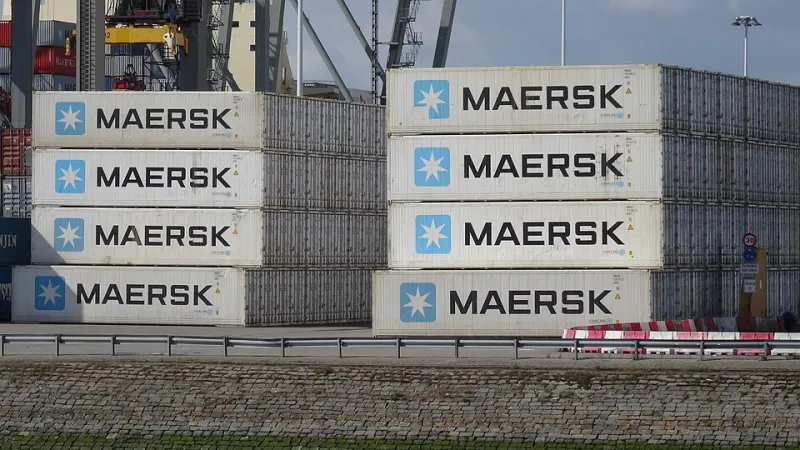
Photo: AgainErick, CC BY-SA 4.0, via Wikimedia Commons
Logistics professionals spend considerable resources optimizing ocean transit — selecting carriers, negotiating lane rates, specifying container types, and monitoring vessel tracking with near-obsessive attention. The irony is that some of the most consequential damage to international cargo occurs not during the 20-plus days a container spends crossing an ocean, but during the comparatively brief window after it arrives at a US port.
The 72 hours between vessel discharge and warehouse unloading represent one of the most underexamined phases in the modern US import supply chain. And for importers who are not actively managing this period, the costs — financial, operational, and reputational — are measurable and growing.
Why the Post-Arrival Phase Is Uniquely Dangerous
A sealed container that has spent weeks in the controlled thermal environment of an ocean vessel undergoes a significant environmental transition the moment it is discharged onto a port terminal. Exposure to direct sunlight, ambient air temperature differentials, and the stop-start thermal cycling of a container yard creates conditions that accelerate several forms of cargo degradation simultaneously.
Condensation is the most immediate concern. As container steel absorbs radiant heat from sunlight, interior air temperatures rise. When that heat dissipates — during overnight cooling or in shaded stacking positions — the temperature differential drives moisture out of the air and onto cargo surfaces, packaging, and container walls. This process, sometimes called container rain, is well-documented in the industry but remains poorly managed at the domestic port level.
Microbial activity presents a parallel threat. Residual organic matter from previous cargo loads, combined with the humidity generated by condensation cycling, creates an environment that supports rapid bacterial and mold growth. Cargo that arrives at a US port in acceptable condition can deteriorate meaningfully within 48 to 72 hours if the container environment is not actively managed.
Thermal stress on packaging and product integrity compounds both of these risks. Certain materials — adhesives, pharmaceutical coatings, food-grade films — experience structural changes at temperature thresholds that port yard conditions routinely exceed during summer months at major US gateway ports including Los Angeles, Long Beach, Houston, and Savannah.
The Operational Blind Spot in US Import Logistics
Despite the well-understood physics of what occurs inside containers during the post-arrival phase, the majority of US import operations treat this period as logistically passive. Containers are discharged, assigned a yard position, and queued for pickup or transload — with no active monitoring or environmental intervention between arrival and unloading.
The reasons for this gap are structural rather than intentional. Port terminals are throughput-optimized environments. Their operational mandate is container movement, not cargo stewardship. Customs and regulatory inspection processes are documentation-focused rather than condition-focused. And most importers do not have visibility into their containers' yard conditions in sufficient detail to make real-time decisions about intervention.
The result is a 72-hour period during which cargo is essentially unmanaged — exposed to environmental stressors that compound whatever conditions accumulated during transit, without any mechanism for detection or mitigation.
How Forward-Thinking Operators Are Closing the Gap
A segment of US logistics providers and sophisticated importers has begun treating the post-arrival phase as an active supply chain management challenge rather than a passive waiting period. The strategies they are deploying share a common architecture: earlier intervention, professional cleaning protocols, and data-driven condition assessment.
Pre-unloading industrial cleaning and conditioning at domestic port facilities is emerging as a meaningful differentiator for logistics operators serving high-value or compliance-sensitive cargo categories. By deploying professional steam cleaning and environmental treatment on containers before unloading — rather than after, when damage has already transferred to cargo — these operators are interrupting the degradation cycle at its most critical point.
Steam treatment of container interiors at domestic facilities serves multiple functions simultaneously. It eliminates the microbial populations that have established themselves during transit and yard dwell. It removes condensation residue and the organic compounds that support continued mold growth. And it provides a documented sanitation record that supports customs compliance, retailer audit requirements, and insurance claims in the event of subsequent damage disputes.
Condition monitoring technology is also being applied to this window with increasing sophistication. Temperature and humidity sensors deployed inside containers during the post-arrival phase generate data that allows logistics managers to identify at-risk shipments before unloading, prioritize intervention resources, and build historical records that inform future packaging and conditioning specifications.
The Competitive Calculus for US Logistics Providers
For third-party logistics providers, freight forwarders, and port-adjacent warehousing operations serving the US import market, the 72-hour post-arrival phase represents both a risk and an opportunity.
The risk is straightforward: logistics providers whose service model does not account for post-arrival environmental management are exposing their clients — and themselves — to damage claims, compliance failures, and customer attrition that could be prevented with relatively modest operational investment.
The opportunity is equally clear. As US importers become more sophisticated in their understanding of where supply chain losses actually originate, they are increasingly willing to pay a premium for logistics partners who can demonstrate active stewardship of cargo across the entire post-arrival phase. Providers who have built professional cleaning and conditioning capabilities into their domestic port operations are differentiating themselves in a market where the majority of competitors are still treating this phase as invisible.
Building the Case for Proactive Intervention
The financial case for proactive post-arrival management is not difficult to construct. Damage claims on US import cargo attributable to condensation, microbial contamination, and thermal stress during the post-arrival phase represent a meaningful and quantifiable loss category for importers across food, pharmaceutical, electronics, and consumer goods sectors.
When those losses are set against the cost of professional steam cleaning and environmental conditioning at domestic port facilities — a service that can be deployed on a per-container basis and scaled to shipment volume — the return on investment is consistently favorable for cargo categories where per-unit value is moderate to high.
More importantly, the non-financial benefits — including regulatory compliance documentation, retailer audit readiness, and the operational confidence that comes from knowing cargo condition is being actively managed — represent value that does not appear in damage claim calculations but is nonetheless real and substantial.
The 72-hour countdown starts the moment a container touches US soil. The question for importers and their logistics partners is whether they are managing that window — or simply waiting for it to expire.