Thermal Gaps, Denied Claims: What US Food Exporters Don't Know About Cold Chain Insurance Is Costing Them Everything
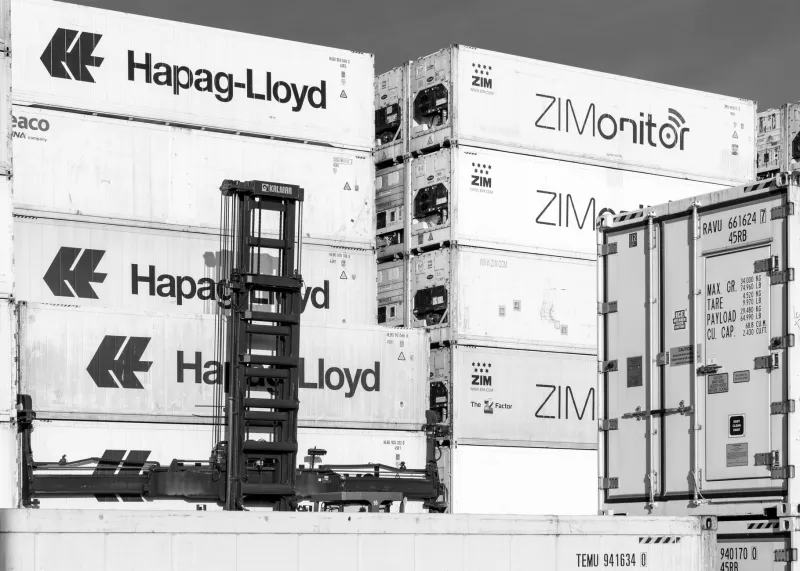
For US food exporters, the cold chain is not a luxury — it is the operational backbone of every international shipment. Frozen proteins, fresh produce, dairy, and pharmaceutical-adjacent food products all travel under strict temperature mandates. When something goes wrong in transit, most exporters instinctively reach for their insurance documentation, confident that a valid policy will absorb the financial blow.
That confidence, unfortunately, is often misplaced.
Insurance claim denials related to cold chain failures have been climbing steadily, and the reasons are rarely the obvious ones. Storms, port delays, and mechanical refrigeration breakdowns are the scenarios most shippers prepare for. What they consistently fail to anticipate is the role that pre-shipment container condition plays in whether a claim ever gets paid.
The Policy Fine Print That Swallows Entire Claims
Marine cargo insurance policies governing temperature-sensitive freight are dense documents, and their exclusion clauses are written with surgical precision. Most policies require that the shipper demonstrate the cargo was loaded into a container that was fit for purpose at the point of origin. This is not merely a statement about whether the refrigeration unit was operational — it extends to the container's physical and sanitary integrity.
When insurers investigate cold chain failures, their adjusters are not simply reviewing temperature logs. They are examining whether the container's interior was clean, free of residual moisture, and absent of organic debris that could accelerate microbial activity or compromise temperature uniformity. A container with residual contamination from a previous cargo — even something as seemingly benign as dried grain dust or agricultural residue — creates thermal irregularities. Hot spots form. Temperature sensors fail to capture localized variance. And when the cargo arrives damaged, the insurer has grounds to argue that the shipper failed to meet the baseline standard of care outlined in the policy.
The result is a denied claim, and the exporter absorbs the full loss.
What Thermal Failure Actually Looks Like in Practice
Consider a scenario that plays out with troubling regularity among mid-sized US food exporters shipping to European and Asian markets. A shipment of premium beef products departs a Gulf Coast port in a refrigerated container that appeared clean upon visual inspection. Temperature logs from the reefer unit show consistent readings throughout the voyage. Upon arrival, however, customs authorities flag the shipment for elevated bacterial counts. The cargo is rejected.
The exporter files an insurance claim. The insurer commissions an independent survey. That survey identifies residual organic matter in the container's floor joints and wall seams — matter that visual inspection alone would never have detected. The insurer cites a clause requiring the shipper to confirm the fitness of the container at loading and denies the claim on the basis that the exporter cannot produce documentation of a pre-loading cleaning and sanitation protocol.
The exporter loses the value of the cargo, the freight costs, and any regulatory penalties associated with the rejection. The insurer pays nothing.
This is not a hypothetical. It is a pattern that logistics professionals across the US food export sector are encountering with increasing frequency.
The Documentation Gap That Insurers Exploit
The central problem is not that exporters are negligent — it is that they are underprepared for the evidentiary standards that insurance disputes demand. Verbal assurances from container depots, informal inspections by freight forwarders, and general cleanliness certificates that lack specificity are routinely dismissed during the claims process.
What insurers want — and what courts have increasingly required in cargo dispute litigation — is a documented chain of custody for the container's condition prior to loading. This means timestamped records of professional cleaning and sanitation procedures, including the methods used, the agents applied, and the surfaces treated. It means temperature mapping conducted after cleaning to confirm that no thermal anomalies exist within the container before the cargo is introduced. And it means third-party validation, not internal sign-offs from the shipper's own staff.
Steam cleaning, when performed by certified industrial service providers, produces exactly this kind of documentation. High-pressure steam treatment eliminates biological residues, neutralizes mold and bacterial colonies, and — critically — generates verifiable service records that can withstand insurer scrutiny. The thermal nature of the process also ensures that no chemical residues are introduced into the container environment, which matters enormously for food-grade shipments where contamination liability extends in multiple directions.
Why Container Preparation Is a Financial Instrument, Not an Operational Afterthought
The logistics industry has long treated container preparation as a cost center — something to be minimized wherever possible in the interest of margin efficiency. This framing is fundamentally misaligned with the financial realities that cold chain exporters now face.
A professional container cleaning and sanitation protocol, including validated steam treatment, typically costs a fraction of a single rejected shipment. When that protocol generates documentation capable of defending an insurance claim, its value multiplies exponentially. It is not an expense; it is a hedge against a category of loss that standard insurance coverage increasingly fails to absorb without proper evidentiary support.
US food exporters shipping perishables to markets with stringent import standards — the European Union, Japan, South Korea, the Gulf Cooperation Council states — are operating in regulatory environments where documentation gaps are exploited at every level, by customs authorities, by foreign buyers invoking rejection clauses, and by domestic insurers looking for grounds to limit exposure.
The exporters who are protecting their margins are the ones who have restructured their pre-shipment protocols to treat container validation as a core commercial function, not a logistical formality.
Actionable Steps for Exporters Rethinking Cold Chain Risk
For US food and pharmaceutical exporters seeking to close the gap between what their policies promise and what they can actually recover, the path forward involves several concrete measures.
First, review existing cargo insurance policies with a qualified marine insurance attorney, specifically focusing on the conditions precedent clauses that govern container fitness. Understand precisely what documentation your insurer would require in the event of a cold chain failure claim.
Second, establish a mandatory pre-loading container inspection and cleaning protocol that includes professional steam sanitation. Ensure that service providers issue detailed, timestamped records that specify the scope of work performed.
Third, implement temperature mapping as a standard pre-loading step for all reefer containers carrying high-value or temperature-sensitive cargo. Baseline thermal data, captured before loading, creates a defensible record of the container's condition at origin.
Fourth, integrate these documentation standards into your contractual arrangements with freight forwarders and container leasing companies. Responsibility for container condition should be explicitly defined, with corresponding documentation obligations assigned to each party in the chain.
Finally, brief your insurance broker on the new protocols and request written confirmation that your documentation approach satisfies the evidentiary requirements of your policy. Do not assume alignment — confirm it in writing.
The Cost of Assuming Coverage That Isn't There
The cold chain insurance crisis facing US food exporters is, at its core, a documentation crisis. The coverage exists. The policies are written. But the conditions required to activate that coverage — particularly those tied to pre-shipment container preparation — are being overlooked at the point in the supply chain where they are easiest and least expensive to address.
The exporters who close this gap will not only protect their claims recovery rate; they will build a competitive advantage in markets where buyers and regulators increasingly reward supply chain transparency. Those who continue to assume that a paid premium is sufficient protection will find, at the worst possible moment, that the fine print is not on their side.