The 48-Hour Blind Spot: How the Final Leg of International Shipping Is Quietly Destroying US Importer Margins
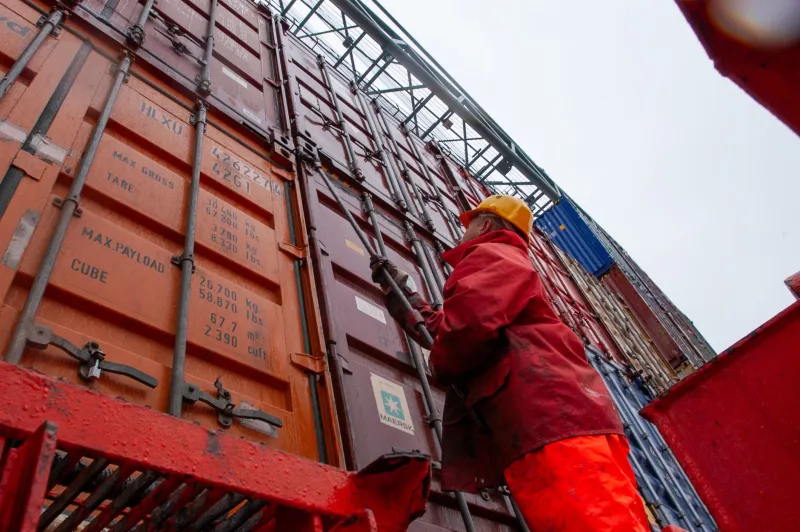
There is a persistent myth in American import logistics: that risk diminishes once a shipment clears international waters. Executives track vessel movements, monitor weather systems across the Pacific, and invest heavily in overseas supplier audits — yet many of those same organizations give comparatively little attention to what happens after a container touches down at ports like Los Angeles, Savannah, or Newark. That oversight is costing them far more than they realize.
The 48-to-72-hour corridor between port arrival and final warehouse acceptance is, for a significant number of US importers, the single most financially damaging phase of the entire logistics cycle. It is a window defined by competing pressures: terminal congestion, CBP processing timelines, carrier demurrage clocks, and an industry-wide tendency to prioritize speed over diligence. When those pressures converge, the results manifest as failed quality inspections, FDA rejections, and supply chain disruptions that no amount of upstream precision can fully offset.
What Actually Happens Inside That Window
When a container is discharged from a vessel and staged at a US marine terminal, it enters a state of institutional limbo. It has left the carrier's active custody but has not yet been formally received by the importer's distribution network. During this period, the container is exposed to a range of environmental and biological hazards that are rarely accounted for in standard logistics planning.
Terminal yards in major US ports are dense, high-traffic environments. Containers are repositioned multiple times using equipment that moves across dozens of cargo types daily. Ground moisture, ambient temperature fluctuations, and cross-contamination from adjacent units are constant variables. For shipments carrying food products, pharmaceuticals, textiles, or any goods subject to FDA or USDA oversight, this environment presents measurable contamination risk — risk that intensifies the longer a container remains staged without proper inspection or protective treatment.
At the same time, the administrative machinery surrounding customs clearance is not always synchronized with physical cargo conditions. A shipment may receive electronic clearance while the container itself has developed internal condensation, pest infiltration, or residual chemical odor from a previously transported commodity. These conditions are invisible on paper and frequently undetected until the cargo reaches a receiving dock — where a quality inspector, an FDA auditor, or a warehouse manager identifies a problem that should have been caught much earlier.
The True Cost Architecture of a Failed Inspection
The financial consequences of a quality inspection failure at a US entry point extend well beyond the immediate cost of the rejected shipment. Importers who have experienced this scenario understand that the visible losses — destroyed or returned inventory, re-inspection fees, and expedited replacement sourcing — represent only the surface layer of a much deeper cost structure.
Below that surface lie demurrage and detention charges that accumulate during the dispute and remediation process. At major US ports, these fees can reach several hundred dollars per container per day, and contested rejections frequently extend resolution timelines by a week or more. Add to that the administrative burden of communicating with customs brokers, regulatory agencies, and overseas suppliers simultaneously, and the operational cost begins to rival the value of the cargo itself.
For importers operating on tight replenishment cycles — particularly those supplying retail chains with seasonal inventory windows — the downstream effects can be even more severe. A delayed or rejected shipment does not simply create a gap in warehouse inventory; it creates a gap on store shelves, triggers contractual penalty clauses with retail partners, and damages supplier relationships that took years to establish. The 48-hour blind spot, in this context, is not a minor inefficiency. It is a structural vulnerability.
Why Rushed Processing Is the Root Cause
The pressure to move containers off terminal as quickly as possible is understandable and, in many respects, rational. Demurrage clocks begin ticking almost immediately after vessel discharge, and the cost of leaving a container staged at a major US port is not trivial. Importers, brokers, and drayage operators are all incentivized to prioritize speed — and that incentive routinely overrides the diligence that proper cargo inspection demands.
The result is a systematic deferral of risk. Containers are pulled from terminals and transported to distribution centers without any intermediate inspection or treatment protocol. The assumption — rarely stated explicitly but deeply embedded in standard operating procedures — is that if customs cleared it, it is ready for warehouse acceptance. That assumption is factually incorrect and commercially dangerous.
Customs clearance is a regulatory determination, not a quality certification. CBP is evaluating documentation, tariff classifications, and trade compliance — not the internal condition of the container. The gap between those two assessments is precisely where contamination, degradation, and rejection events originate.
The Case for Intervention at the Port of Entry
The most effective strategy for closing this blind spot is also the most straightforward: introducing a structured inspection and treatment protocol during the transit phase, before containers reach the warehouse dock. This means deploying professional container assessment and sterilization services at or near the port of entry, within the 48-to-72-hour window, rather than waiting for problems to surface downstream.
High-temperature steam treatment has emerged as one of the most reliable tools for this intervention. Applied properly, steam penetrates container interiors to neutralize biological contaminants, eliminate residual odors from prior cargo, and address moisture accumulation that would otherwise compromise sensitive goods. Unlike chemical treatments, steam leaves no residue and is compatible with a wide range of cargo types — including food-grade and pharmaceutical shipments where chemical exposure is prohibited.
Beyond sterilization, a thorough pre-warehouse inspection protocol should include structural assessment of the container itself — checking seal integrity, floor condition, and ventilation — as well as documentation review to flag any discrepancies between declared and actual cargo conditions. These steps, conducted by trained logistics professionals, convert the 48-hour blind spot from a liability into a controlled checkpoint.
Building the Protocol Into Standard Operating Procedure
For US importers who have not yet formalized this kind of entry-point intervention, the implementation path is less complex than it might appear. The most immediate step is identifying which shipment categories carry the highest inspection risk — typically food, agricultural products, textiles, and any goods subject to FDA oversight — and prioritizing those lanes for enhanced entry-point protocols.
From there, partnering with a logistics services provider that offers port-adjacent inspection and treatment capabilities allows importers to integrate this layer without building internal infrastructure. The cost of these services, measured against the average financial impact of a single inspection failure, typically yields a favorable return within the first several months of implementation.
The broader principle, however, is one of perspective. The supply chain does not end when a vessel docks. It ends when verified, compliant cargo is accepted into a US distribution facility. Every hour between those two events carries risk — and every dollar spent managing that risk proactively is a dollar not spent recovering from a failure that should never have occurred.
At SteamIt Global, we recognize that moving goods across international borders is only half the challenge. Delivering them in a condition that meets the exacting standards of US regulatory bodies and commercial partners is where operational excellence is ultimately measured. The 48-hour blind spot is not an inevitability. It is a problem with a solution — and the time to implement it is before the next container clears customs.