Navigating India: A Strategic Guide for US Logistics Operators Managing Freight Through the Subcontinent
India has emerged as one of the most consequential trade partners for the United States in the twenty-first century. With bilateral merchandise trade exceeding $190 billion annually and a manufacturing sector undergoing rapid modernization, the subcontinent now sits at the center of diversified sourcing strategies for American businesses across pharmaceuticals, textiles, automotive components, and industrial goods. Yet for all of its promise, India presents a logistics environment that demands careful navigation, specialized preparation, and a clear-eyed understanding of ground-level realities.
For US logistics operators, freight forwarders, and supply chain managers, the question is no longer whether to engage with India — it is how to do so without absorbing the operational penalties that come from inadequate preparation.
Understanding India's Port Landscape
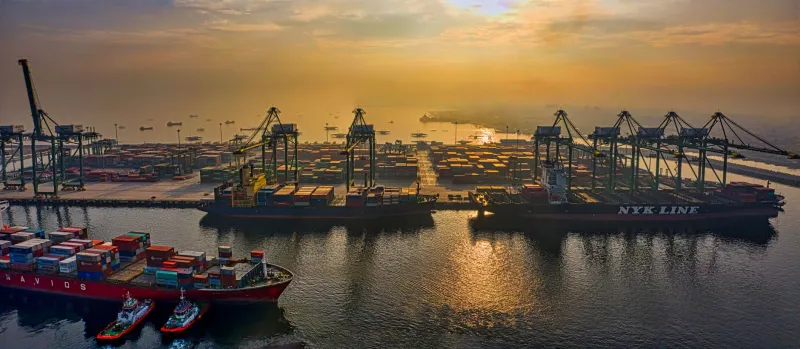
India operates more than a dozen major seaports, with Jawaharlal Nehru Port (JNPT) near Mumbai handling the largest share of containerized cargo. Other significant gateways include Mundra, Chennai, Kolkata, and Cochin. Each port carries its own infrastructure profile, congestion patterns, and inspection protocols — and these differences matter enormously at the operational level.
US importers receiving goods from India should be aware that container dwell times vary considerably between ports. JNPT, despite its scale, has historically experienced congestion that extends container turnaround windows. Mundra, operated by Adani Ports, has developed a reputation for greater operational efficiency and is increasingly preferred by exporters targeting reliability-sensitive supply chains.
The practical implication for US operators is straightforward: the port of origin in India should factor into your overall logistics planning, not merely the final destination. Delays at origin translate directly into compressed timelines at US receiving facilities, leaving less margin for inspection, cleaning, and quality verification before goods enter distribution.
Container Condition Standards Across Indian Export Hubs
One of the most consistent challenges reported by US importers sourcing from India involves the condition of containers upon arrival. Container hygiene standards — encompassing cleanliness, moisture control, and structural integrity — are not uniformly enforced across Indian ports and inland container depots (ICDs).
Inland container depots, which serve as critical consolidation and stuffing points for export cargo moving from production centers to coastal ports, operate under varying degrees of oversight. Containers that have been inadequately cleaned, improperly sealed against humidity, or loaded without attention to ventilation requirements can arrive at US ports with moisture damage, pest evidence, or residue contamination that triggers regulatory scrutiny and costly delays.
For US businesses importing textiles, food ingredients, or pharmaceutical raw materials from India, this is not a theoretical concern. The FDA and USDA both maintain active inspection programs targeting containerized imports, and cargo arriving in substandard containers faces a meaningfully higher probability of examination, hold, or rejection.
Professional steam cleaning and sanitation services — applied either at the Indian point of origin or immediately upon arrival at US receiving facilities — represent a proven mitigation strategy. Industrial steam treatment eliminates biological contaminants, neutralizes residual odors from prior cargo, and removes moisture that would otherwise accelerate degradation during transit.
Regulatory Considerations for US-India Trade
The regulatory environment governing US-India trade has grown increasingly complex in recent years. US Customs and Border Protection (CBP) has expanded its targeting algorithms for containerized cargo, with particular attention paid to goods originating from high-volume manufacturing regions in South Asia. This means that documentation quality, container cleanliness records, and phytosanitary certifications carry greater weight than they did even five years ago.
For pharmaceutical imports specifically — a category in which India is the world's leading generic supplier to the United States — FDA oversight of manufacturing and shipping conditions is stringent. Container integrity records, temperature logs, and sanitation documentation are all subject to review. US importers who cannot produce credible documentation for these elements expose themselves to import holds that can paralyze product launches and disrupt supply continuity.
US exporters sending goods to India face a parallel set of considerations. Indian customs authorities have their own inspection frameworks, and containers arriving without proper sanitation certification or with evidence of pest contamination can face quarantine measures that significantly delay clearance.
Inland Logistics and the Last-Mile Challenge
Beyond the ports themselves, India's inland logistics network presents its own set of variables. Road infrastructure, while improving steadily under government investment programs, remains uneven across states. Rail freight, which the Indian government has prioritized as a strategic corridor for heavy cargo, offers an increasingly viable alternative for moving goods between production centers and port gateways — but requires advance planning and coordination with local freight agents.
For US companies establishing or expanding sourcing relationships in India, engaging a logistics partner with genuine on-the-ground presence is not a luxury — it is a prerequisite. Local expertise translates into real-time visibility over container stuffing, documentation preparation, and departure scheduling, all of which directly affect the condition and timeliness of cargo arriving at US facilities.
Building a Resilient India Sourcing Strategy
The US businesses that manage India-origin freight most effectively share several operational characteristics. They invest in pre-shipment inspections conducted by qualified third parties at the point of stuffing. They specify container condition requirements contractually with Indian suppliers and freight forwarders. They maintain relationships with US-side logistics service providers capable of rapid intervention — including industrial cleaning and sanitation — when containers arrive outside acceptable parameters.
Perhaps most importantly, they treat container preparation not as a cost center but as a risk management function. The financial exposure associated with a single rejected shipment, an FDA-triggered import hold, or a contamination-related product recall dwarfs the investment required to ensure that containers are properly prepared before they leave Indian soil.
Positioning for India's Next Phase of Growth
India's trade trajectory points consistently upward. Government initiatives targeting manufacturing expansion, combined with growing US interest in supply chain diversification away from single-country dependencies, are accelerating the volume of freight moving between the two nations. For US logistics operators, the window to establish robust India-specific protocols — covering container standards, sanitation requirements, documentation practices, and inland coordination — is open now.
Those who invest in that infrastructure today will be better positioned to absorb the volume increases ahead without absorbing the operational penalties that come from treating India as simply another lane on a global network. The subcontinent rewards preparation. It penalizes assumption.
At SteamIt Global, we work with US importers and exporters at every stage of the India freight cycle — from pre-shipment consultation to arrival-side industrial cleaning and sanitation services. Our teams understand the specific challenges that Indian-origin cargo presents and are equipped to ensure that your supply chain meets the standards your customers, your regulators, and your business reputation demand.