The Freight Gatekeepers: How Mid-Size US Distribution Centers Are Forcing a Reckoning Over International Container Standards
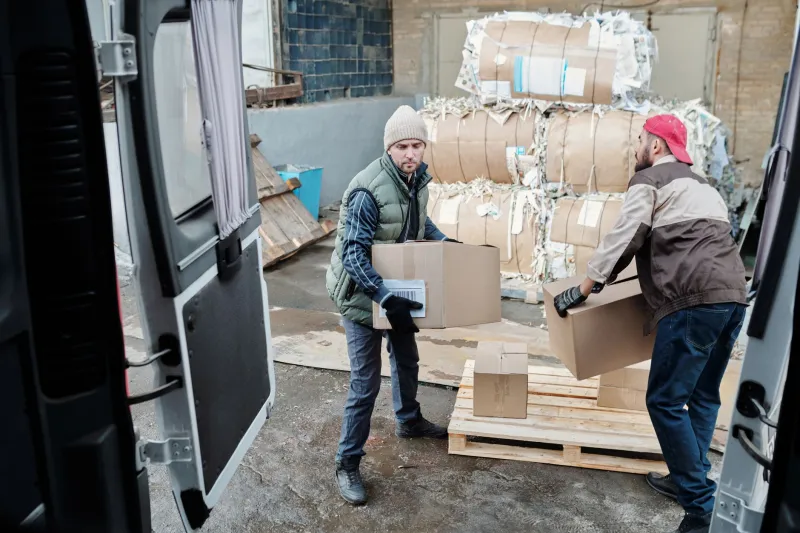
For most of the past two decades, the relationship between regional distribution centers and international freight was defined by a fundamental power imbalance. Large importers and global carriers held the leverage. Regional warehouses, eager for throughput volume, accepted what arrived—contaminated containers, moisture-damaged pallets, and freight bearing the residual evidence of inadequate pre-shipment preparation—because the alternative was turning away business they could not easily replace.
That calculus is shifting. And the implications for how container sanitation standards are set, enforced, and priced across the US import market are more significant than most industry observers have yet acknowledged.
A Movement Built on Margin Pressure
The origins of this shift are not ideological. They are financial. Regional distribution operators across the Midwest, Southeast, and Mountain West have spent years absorbing the hidden costs of substandard international freight: accelerated equipment wear from contaminated loads, labor overruns from damaged-goods sorting and documentation, inventory write-downs from moisture or pest-related product loss, and the reputational exposure of passing compromised goods downstream to retail or manufacturing customers.
For a large national third-party logistics provider, these costs are diffuse—spread across a massive volume base and partially absorbed into overhead. For a mid-size regional operator running a 200,000-square-foot facility with tight margins and a concentrated customer base, they are existential. A single contaminated shipment that compromises a food-grade storage zone, triggers a pest control response, or generates a customer claim can consume months of operating profit.
The operators who have begun refusing substandard containers are not making a philosophical statement. They are responding to a financial reality that has become impossible to ignore.
How Refusal Policies Are Being Structured
The mechanics of this emerging gatekeeping behavior vary by operator, but certain patterns are becoming recognizable across the industry.
The most straightforward approach involves requiring pre-arrival documentation of container cleaning and inspection as a condition of acceptance. Operators implementing this standard are specifying that all international freight must arrive with a third-party sanitation certificate—ideally one that documents professional steam cleaning or equivalent treatment at origin—before a dock appointment will be scheduled. Shipments that cannot produce this documentation are either refused outright or subjected to a mandatory inspection protocol at the importer's expense.
More sophisticated operators are going further, implementing incoming freight scoring systems that assess container condition at arrival against standardized criteria: interior cleanliness, structural integrity, moisture indicators, pest evidence, and documentation completeness. Shipments that fall below acceptable thresholds trigger a formal remediation process, with associated costs charged back to the importer or carrier of record. Repeat offenders are flagged in the facility's vendor management system, and in some cases, relationships are terminated.
A smaller but growing number of regional operators are embedding container standard requirements directly into their warehouse service agreements, establishing contractual liability for importers who deliver non-compliant freight. This legal formalization of what was previously an informal expectation represents a meaningful escalation—and it is generating serious attention from the importers and carriers on the receiving end of those contracts.
The Pushback and Why It Is Losing Ground
Predictably, these policies have generated resistance from importers who view regional distribution centers as downstream service providers rather than standards enforcers. The objections follow familiar lines: container preparation adds cost, documentation requirements slow logistics timelines, and regional operators are overstepping their role by imposing standards that are the importer's prerogative to set.
These arguments are losing traction for a straightforward reason: the operators enforcing container standards are demonstrating measurably better financial performance than those who do not. Facilities that have implemented rigorous acceptance protocols are reporting reductions in labor costs associated with damaged-goods handling, lower rates of customer claims, and improved equipment maintenance cycles. They are also, increasingly, attracting the more sophisticated importers—the ones who have already invested in supply chain hygiene and who want distribution partners capable of maintaining that standard.
In a market where distribution center capacity is not unlimited, the operators with the strongest quality reputations are gaining negotiating leverage. The power dynamic that once favored volume-hungry warehouses accepting any freight that arrived is giving way to a quality-differentiated market where the best facilities can be selective.
Large Carriers Are Taking Notice
Perhaps the most significant indicator of this movement's momentum is the response it is generating from major carriers and large-scale importers. Several large international freight operators have begun voluntarily upgrading their container preparation standards specifically to maintain access to regional distribution networks that have implemented strict acceptance protocols.
This is a meaningful reversal. Historically, large carriers set the standards that smaller logistics players were expected to accommodate. The emergence of a critical mass of regional operators with the commercial confidence to enforce their own requirements is introducing a new source of standards pressure into the supply chain—one that operates from the ground up rather than from the top down.
For the industry as a whole, this dynamic is likely to accelerate the normalization of rigorous container preparation as a baseline expectation rather than a premium service. When regional distribution centers across multiple geographic markets are independently converging on similar sanitation requirements, the effect is functionally equivalent to a market standard—even without formal regulatory codification.
What This Means for Importers Charting a Path Forward
For US importers who have not yet confronted this new reality, the strategic implications are clear. The era of treating container preparation as a discretionary cost—something to optimize away when margins are tight—is ending. The distribution network that once absorbed the consequences of substandard freight is increasingly unwilling to do so.
The most defensible response is not reactive compliance but proactive investment. Importers who establish robust pre-shipment sanitation protocols, build certified container cleaning into their standard origin procedures, and arrive at distribution facilities with complete documentation are not merely avoiding rejection. They are positioning themselves as preferred logistics partners in an environment where that designation carries genuine commercial value.
The regional warehouse rebellion, as it might fairly be called, is ultimately a market correction. It is distributing the true cost of substandard container preparation back to the parties responsible for it—and in doing so, it is creating incentives for the upstream investments that should have been standard practice all along.
The freight gatekeepers have arrived. And the supply chain will be cleaner for it.