Gridlock and Grime: How Port Congestion Is Amplifying the Cost of Substandard Container Preparation for US Importers
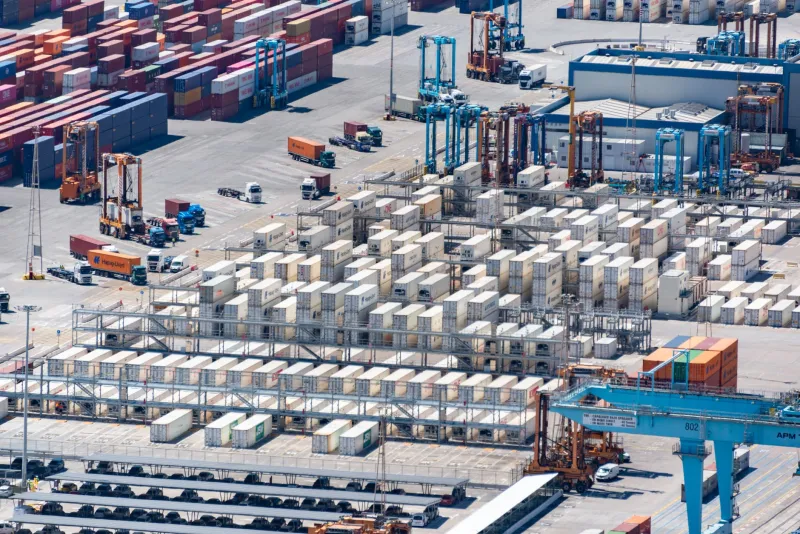
The numbers are difficult to ignore. Average dwell times at major US gateway ports—Los Angeles, Long Beach, New York/New Jersey, and Savannah—have repeatedly spiked in recent years, driven by vessel bunching, labor constraints, and infrastructure limitations that no single stakeholder controls. For most importers, congestion is treated as an external variable: frustrating, expensive, and largely unavoidable.
What that framing misses, however, is the degree to which container condition determines whether congestion becomes a manageable inconvenience or a cascading financial emergency. Importers who arrive at berth without documented sanitation records, pre-cleared inspection status, or verified cargo hygiene protocols are not simply facing a delay—they are entering a compounding cycle of costs that can erode an entire shipment's margin before the first pallet reaches a warehouse floor.
The Mechanics of a Compounding Delay
To understand the stakes, consider what happens when a container flagged for inspection encounters a congested terminal. US Customs and Border Protection, the FDA, and the USDA each maintain independent authority to hold freight pending review. When any of these agencies identifies a cleanliness concern—residual organic matter, pest evidence, moisture damage, or documentation gaps—the container enters a secondary inspection queue.
At a congested port, that queue does not move quickly. Demurrage fees begin accumulating immediately upon expiration of the free-time window, which at many major terminals now runs as short as two to four days. Detention charges for the container unit itself layer on top. Drayage rescheduling, warehousing overflow costs, and expedited freight alternatives compound the exposure further.
The importer who assumed that a clean-enough container would pass without scrutiny is now facing costs that dwarf whatever savings were realized by skipping pre-shipment sanitation verification. The math is unambiguous: a single detained container at a congested terminal can generate demurrage and ancillary charges exceeding $10,000 within a week—often far more for specialized or high-value cargo.
Why Pre-Arrival Protocols Change the Calculation
The strategic response to this dynamic is not passive. Forward-thinking importers are increasingly working with logistics partners to establish pre-arrival sanitation verification as a contractual standard—not an optional enhancement.
This means requiring documented steam cleaning or equivalent treatment at the origin port, with third-party inspection certificates attached to the shipping documentation before the vessel departs. It means establishing a verifiable chain of custody for container hygiene that customs officers can review digitally before a physical inspection is even requested. And it means building relationships with freight partners who understand that clean containers are not a courtesy—they are a compliance prerequisite.
When a container arrives at a US terminal with a complete sanitation record already on file, the probability of a hold drops substantially. More importantly, if a secondary inspection is triggered for any reason, the existence of pre-verified documentation shortens the review cycle considerably. In a congested environment where every hour of dwell time carries a financial cost, that acceleration is material.
The Regulatory Layer That Makes Speed Essential
Port congestion intersects with regulatory timelines in ways that are not always intuitive. The FDA's import alert system, for instance, operates on a rolling basis—meaning that a single flagged shipment can elevate the scrutiny applied to subsequent imports from the same supplier or facility. An importer who cuts corners on container sanitation once does not simply pay for that one incident. They may be paying for it across multiple future shipments as enhanced examination protocols are triggered.
Similarly, USDA APHIS holds for pest or soil contamination are not resolved quickly at a busy terminal. Fumigation services must be scheduled, documentation must be generated, and reinspection must be arranged—all while demurrage accumulates. At ports operating near capacity, the logistical choreography required to execute a mid-terminal remediation is both time-consuming and expensive.
The importer who treats pre-arrival sanitation as a cost center rather than a risk-mitigation tool is, in effect, self-insuring against a liability exposure they have not properly quantified.
Regional Port Dynamics and the Diversion Gamble
Some importers have responded to congestion at primary gateway ports by diverting shipments to secondary terminals—Wilmington, Baltimore, Houston, or Pacific Northwest facilities—in search of faster processing. This strategy has merit in certain circumstances, but it does not eliminate the container condition variable. Smaller ports frequently have fewer resources for expedited secondary inspections, meaning a flagged container at a regional terminal may face a longer absolute delay than the same container would at a larger facility with dedicated inspection infrastructure.
Diversion also introduces new drayage networks and carrier relationships, which can create documentation handoff gaps if sanitation records are not explicitly transferred and confirmed at each transition point. The importer who diversifies their port strategy without simultaneously standardizing their container hygiene documentation framework may find that the efficiency gains from diversion are offset by new compliance friction.
Building a Protocol That Survives Congestion
The operational implication is clear: container sanitation verification must be treated as a supply chain function, not a port function. By the time a container reaches a US terminal, the window for proactive intervention has effectively closed. The decisions that determine whether congestion becomes a minor inconvenience or a financial emergency were made weeks earlier—at the origin facility, during loading, and in the documentation chain that accompanies the shipment across the ocean.
US importers who recognize this reality are redesigning their pre-shipment checklists to include explicit sanitation milestones. They are selecting freight partners who can provide certified cleaning records as a standard deliverable, not a special request. And they are building the cost of rigorous pre-arrival preparation into their landed cost models—because that cost is invariably lower than the alternative.
Port congestion is not going away. The infrastructure investments and policy changes required to meaningfully expand US terminal capacity will take years to materialize. In the interim, the importers who navigate congestion most effectively will be those who arrive prepared—with containers that are clean, documented, and cleared for rapid processing before the vessel reaches the berth.
In a market where every hour of delay carries a price tag, preparation is not a competitive advantage. It is a financial necessity.