The Distribution Center Deficit: Quantifying What Substandard International Freight Condition Is Actually Costing American Regional Logistics Hubs
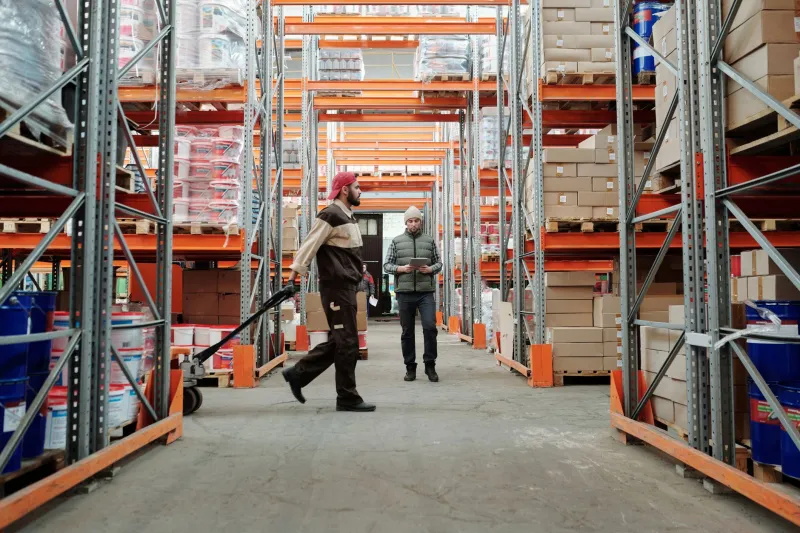
The economics of a regional distribution center are built on velocity and accuracy. Freight arrives, gets sorted, gets staged, and moves outbound. Every hour of unplanned delay, every unit of damaged product, every return that re-enters the facility represents a deviation from the operational model that erodes margin and compounds downstream. Distribution center managers understand this intuitively. What many do not fully account for is the degree to which the problems they manage daily originate not in their facility—but in the containers that arrive at their docks.
The final domestic leg of an international supply chain is where accumulated freight condition problems become visible costs. By the time a container reaches a regional hub in Memphis, Dallas, Columbus, or the Inland Empire of Southern California, it has traveled from a foreign origin facility through a port, across an ocean, through a US port of entry, and often through an intermediate transload or deconsolidation operation. At each stage, the container's interior environment has been subject to temperature fluctuation, humidity variation, vibration stress, and potential biological or chemical exposure. None of the parties responsible for those earlier stages are present when the container doors open at the distribution dock.
The Accountability Gap That Distribution Centers Inherit
Carrier liability in international freight is governed by a framework—the Carriage of Goods by Sea Act and its Hague-Visby antecedents—that was not designed with modern container hygiene standards in mind. Ocean carriers bear responsibility for cargo loss or damage caused by specific enumerated perils, but the threshold for establishing carrier liability for contamination damage attributable to container condition is practically high and legally expensive to pursue.
Freight forwarders similarly disclaim responsibility for container interior conditions that predate their involvement. Customs brokers are documentation specialists, not cargo inspectors. The result is a liability architecture in which the party least responsible for the container's condition—the distribution center receiving it—bears the full operational and financial consequence of whatever condition it arrives in.
This is not a theoretical injustice. It is a daily operational reality at facilities receiving international freight across the United States, and its financial signature is embedded in cost lines that most distribution center operators have accepted as fixed: elevated damage write-offs, above-average product return rates from retail partners, and labor costs associated with inspecting and re-handling freight that arrived in substandard condition.
Mapping the Cost Architecture
To understand the financial scale of the problem, it is useful to disaggregate the costs that substandard container condition generates at the distribution center level.
Product damage and write-offs represent the most direct cost. Containers that have experienced moisture intrusion, residual chemical exposure from prior cargo, or inadequate surface hygiene deliver product in compromised condition. For consumer goods, food items, and pharmaceutical products, even marginal degradation can render entire units unsaleable. Industry estimates from the Warehousing Education and Research Council suggest that product damage claims at US distribution facilities attributable to in-transit condition—rather than handling errors—represent between 8 and 14 percent of total distribution damage costs annually, depending on freight category.
Customer return rates constitute a second and often larger cost vector. Retailers and e-commerce fulfillment partners who receive degraded product do not absorb the loss quietly. Chargebacks, return authorization fees, and replacement shipment costs flow back to the distribution center and, ultimately, to the importer of record. For consumer packaged goods categories, a single contamination-related quality event affecting a retail partner's distribution network can generate return costs that dwarf the original shipment value.
Labor and throughput disruption is the least quantified but operationally most disruptive cost dimension. When a container arrives in poor condition—whether due to pest evidence, odor contamination, surface residue, or moisture-damaged packaging—the receiving team cannot process it at standard throughput rates. Inspection, segregation, damage documentation, and management escalation consume labor hours that were budgeted for normal receiving operations. At a facility processing hundreds of containers weekly, even modest per-container delays compound into material throughput losses.
Regulatory and compliance exposure adds a further dimension for facilities handling food, pharmaceutical, or agricultural products. Distribution centers that receive and redistribute contaminated product can themselves become subjects of FDA inspection activity if downstream customers report quality issues. The cost of a regulatory inquiry—legal response, operational disruption, potential recall coordination—is orders of magnitude larger than any upstream container preparation investment.
The Infrastructure Case for On-Site Steam Cleaning
The operational logic of installing industrial steam cleaning capacity at major regional distribution hubs is straightforward: it converts an uncontrolled variable—incoming container condition—into a managed and documented one. Rather than accepting whatever condition a container arrives in and absorbing the downstream costs, a facility equipped with steam cleaning infrastructure can process incoming international freight through a standardized hygiene protocol before it enters the main receiving stream.
The cost-benefit arithmetic is not subtle. A high-capacity industrial steam cleaning station at a major distribution hub represents a capital investment in the range of $150,000 to $400,000 depending on throughput requirements and configuration. Operating costs, including labor, water, and energy, add approximately $18 to $35 per container treated at scale. Against those figures, consider the avoided costs: even a conservative estimate of $800 in average damage, return, and labor costs per affected container, applied to a facility receiving 500 international containers weekly with a 12 percent contamination-related incident rate, produces an annual avoidable cost exposure exceeding $2.4 million.
Facilities that have piloted incoming container sanitation programs—including several regional hubs serving major retail supply chains in the Southeast and Midwest—report measurable reductions in damage write-offs within the first two operating cycles. One Midwestern distribution facility serving a national home goods retailer documented a 31 percent reduction in container-related product damage claims in the six months following implementation of a pre-receiving steam treatment protocol.
Changing the Conversation With Upstream Partners
Beyond the direct cost savings, distribution centers that implement formal incoming container hygiene programs gain a secondary advantage: documented evidence that shifts accountability conversations with upstream partners. When a facility can demonstrate, through timestamped inspection and treatment records, that a container was processed through a certified hygiene protocol upon arrival and that damage was present before treatment—rather than introduced during distribution—the evidentiary basis for supplier and carrier claims is substantially stronger.
This documentation capability transforms the distribution center from a passive cost absorber into an active participant in supply chain quality management. It creates the foundation for contractual hygiene standards in inbound freight agreements, for supplier scorecards that include container condition metrics, and for freight rate negotiations that reflect the true cost of substandard container preparation.
Reframing the Investment Decision
The question distribution center operators and regional logistics hub managers should be asking is not whether steam cleaning infrastructure represents a justifiable expense. The costs of not having it are already being paid—they are simply distributed across damage lines, return rates, and labor variances in ways that obscure their origin.
The more precise question is whether those costs are being measured accurately enough to make the investment decision visible. In most cases, a rigorous cost attribution exercise—tracing damage, return, and labor costs back to container condition as a contributing factor—reveals a financial case for hygiene infrastructure that is both compelling and, once quantified, difficult to responsibly defer.